By Fran Williamson, Guest Blogger
Fran Williamson is a researcher and writer focused on Philadelphia and Main Line history, with a particular interest in the Enochs and Williamson families.
In 1849, as thousands of Americans streamed west in search of gold, Ardmore stonecutter Enoch Enochs (1826-1906)—my second great grandfather—set out from Philadelphia to see the opportunities for himself. The chaos of San Francisco did not suit him, and on his return journey he passed through Louisiana—an encounter that would redirect the course of his family’s business for more than sixty years.
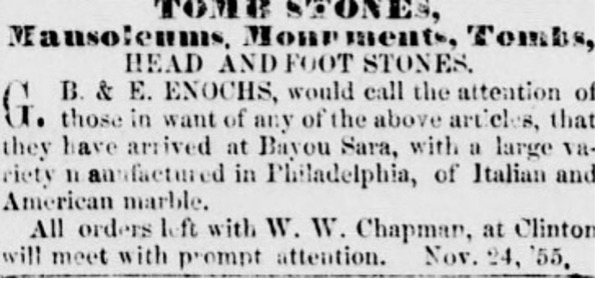
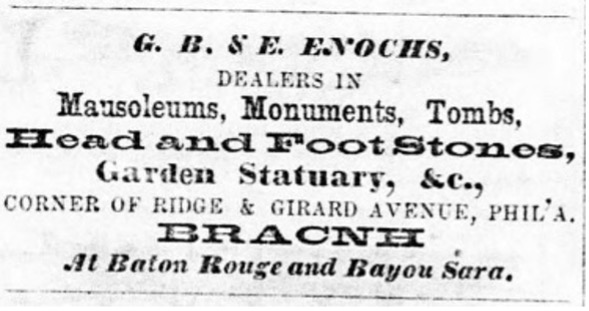
Louisiana’s distinctive tradition of aboveground burials immediately caught Enoch’s trained eye. He recognized the region’s need for durable, high-quality marble vaults, tombs, and monuments—work that GB&E Marble of Philadelphia was positioned to supply. Enoch and his brother George expanded their firm, by establishing a Louisiana branch that would become one of the most enduring crossregional marble operations of the nineteenth century. Newspaper advertisements soon confirmed their presence. Notices in the St. Francisville Sentinel during the 1850s announced the arrival of “tomb stones, mausoleums, monuments… manufactured in Philadelphia,” signaling that the Enochs brothers were actively supplying communities from Baton Rouge to Bayou Sara. Their work became part of the architectural landscape of Southern memorial culture.
A Strategic Location Along Baton Rouge’s Mule Line
A key to the Louisiana division’s longevity was its location along Baton Rouge’s mule-drawn Belt Line, a circular freight and passenger railway connecting the Mississippi River landing to the city’s commercial corridor. Before motorized drays or trucks existed, this was the only reliable way to move multi-hundred pound materials—such as marble slabs—between the river and inland businesses.
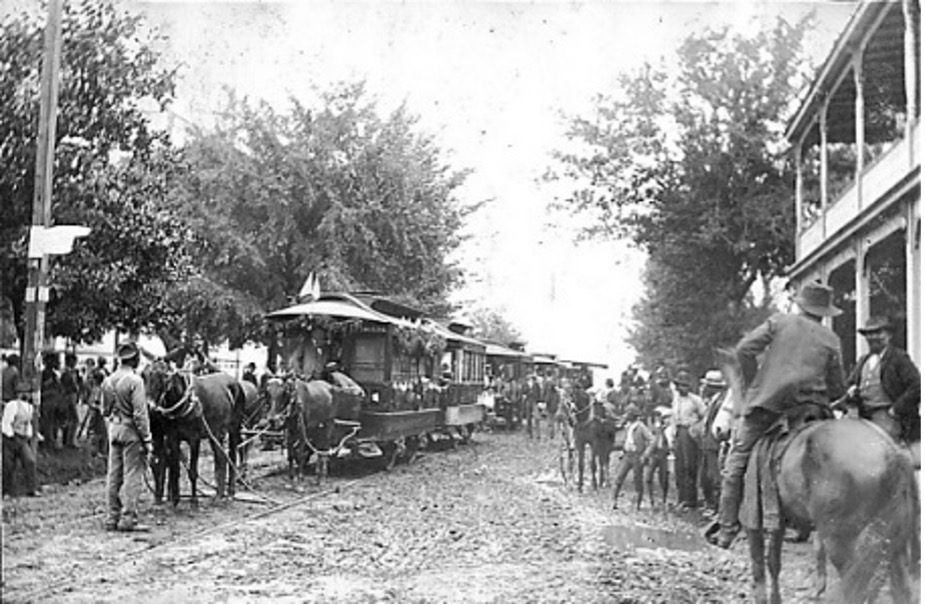
The Enochs marble yard stood directly beside Piper’s Furniture, their local contact, both positioned to take advantage of the steady flow of freight along the line. Marble shipped from Philadelphia could be unloaded at the river, hauled by mule car to the yard, and then redistributed throughout the region. This modest but efficient infrastructure made a sixtyyear Louisiana operation not only possible but practical.
Documenting the Louisiana Branch
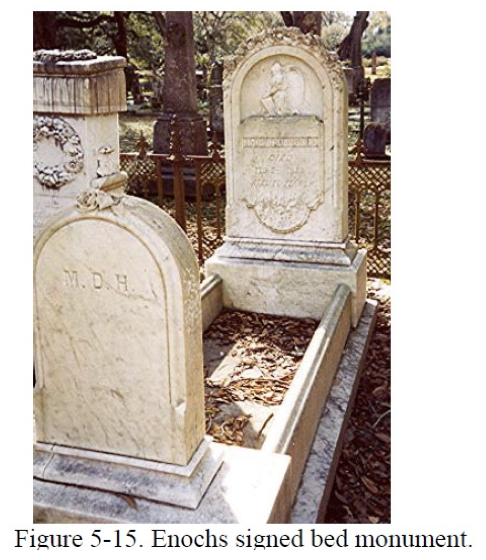
Louisiana researcher Pat Colquette, with whom I corresponded in 2012, documented the steady regional demand for marble shipped from Philadelphia in her 2003 LSU thesis. Her work includes numerous photographs of GB&E’s signed monuments across the state. Surviving examples—such as a signed Enochs bed monument in Grace Episcopal Church Cemetery in St. Francisville—demonstrate the craftsmanship that defined both branches of the business. It was common for nineteenthcentury stonecutters to sign their work when it was installed outside their home base of operations.
Returning Home
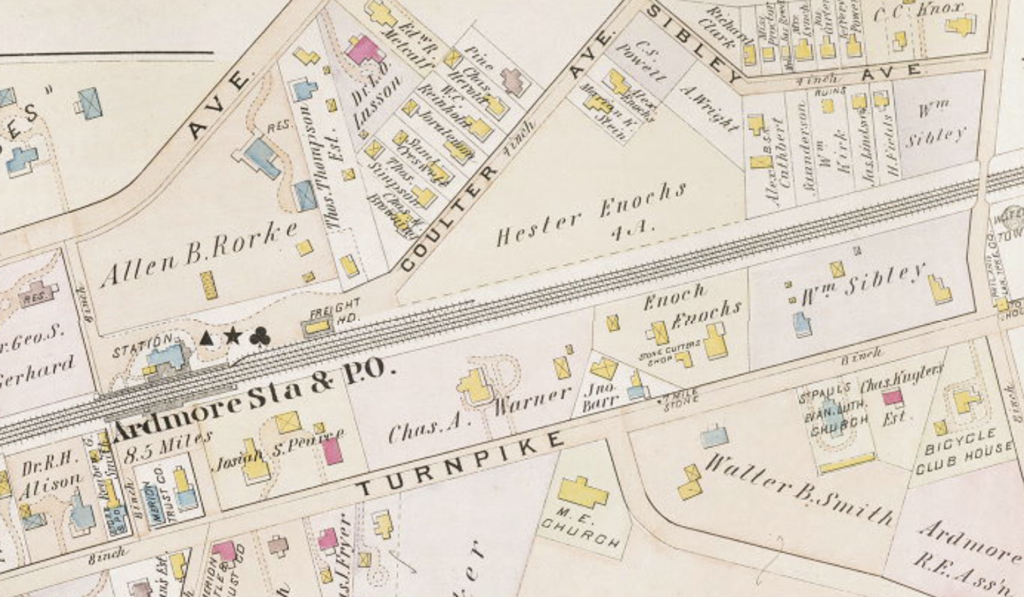
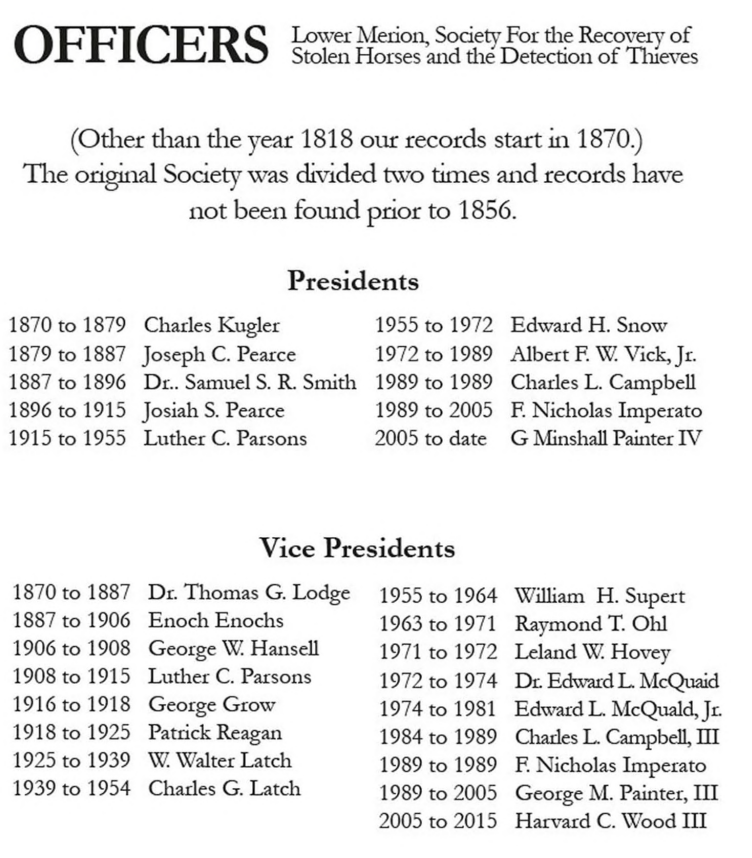
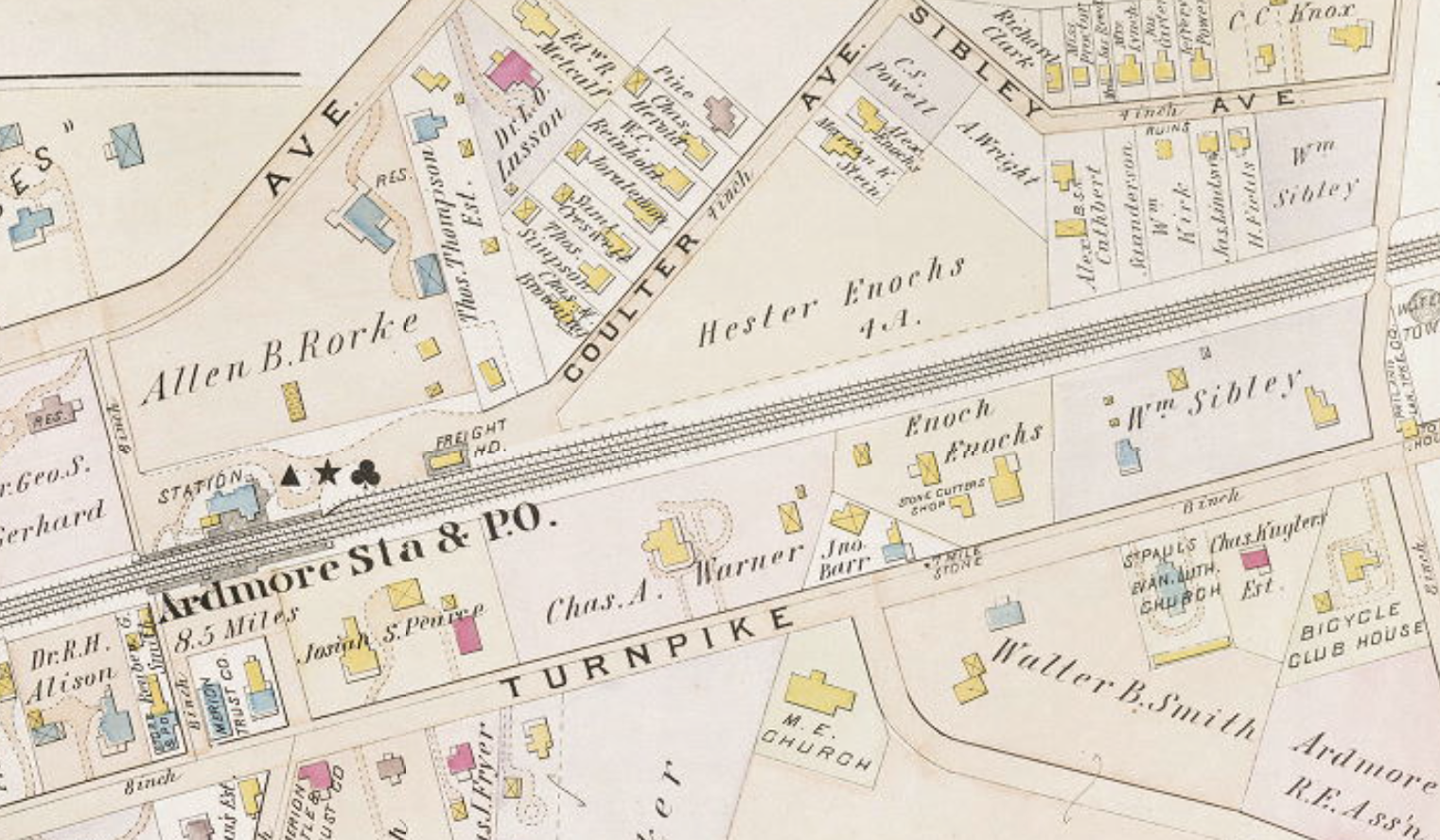
An 1896 property map shows the Enochs and Hester parcels along Lancaster Pike, reminders that the family’s roots remained firmly in Lower Merion even as their work reached far beyond it. In 1894 Enochs was named Postmaster of Ardmore by President Cleveland, and served from 1887-1906 as Vice President of the Lower Merion Society for the Detection and Prosecution of Horse Thieves (see below), a civic-minded organization that functioned as an early form of community policing and mutual aid in an era when horse theft carried real economic consequences.