
By Rory Crisfulla, Guest Blogger
Rory is a senior at Elon University studying Economic Consulting with a minor in Political Science
What began as the practical task of sorting and documenting a large collection quickly became something much more interesting: an opportunity to see the past not through major events or famous figures, but through the lives of ordinary, local people who experienced it firsthand.
I was especially grateful for the help of my fellow intern, Willa Salmonson, a student at Middlebury College who has a background in history. Her perspective and knowledge added another dimension to the process, and I enjoyed learning more about her education and interest in historical preservation.
I also want to thank Lower Merion Historical Society Board member Dennis Montagna for taking the time to show me around the Society and share his remarkable knowledge of the area’s history and collection. One of the things Dennis showed me at the Society that stood out most was the Byerley Collection, a series of letters sent during World War II by former students who had been drafted to their shop teacher back home. Reading their written words offered something a history book simply cannot. The letters revealed the people living underneath all of that history—underneath the dates, battles, leaders, and statistics. They wrote to someone from home on pages they held in their own hands, without knowing how the history unfolding around them would ultimately end, or even whether they would make it home themselves.
Another piece that stood out to me was a small, pocket-sized board game sent from Narberth to local troops actively serving during the war. It was such a simple object, but that was precisely what made it memorable. In the middle of something enormous and tragic, someone had thought to send a tiny game—a piece of normal life that could fit inside a soldier’s pocket. In many ways, it is these seemingly mundane objects that can tell us the most about what it was actually like to live in another time.
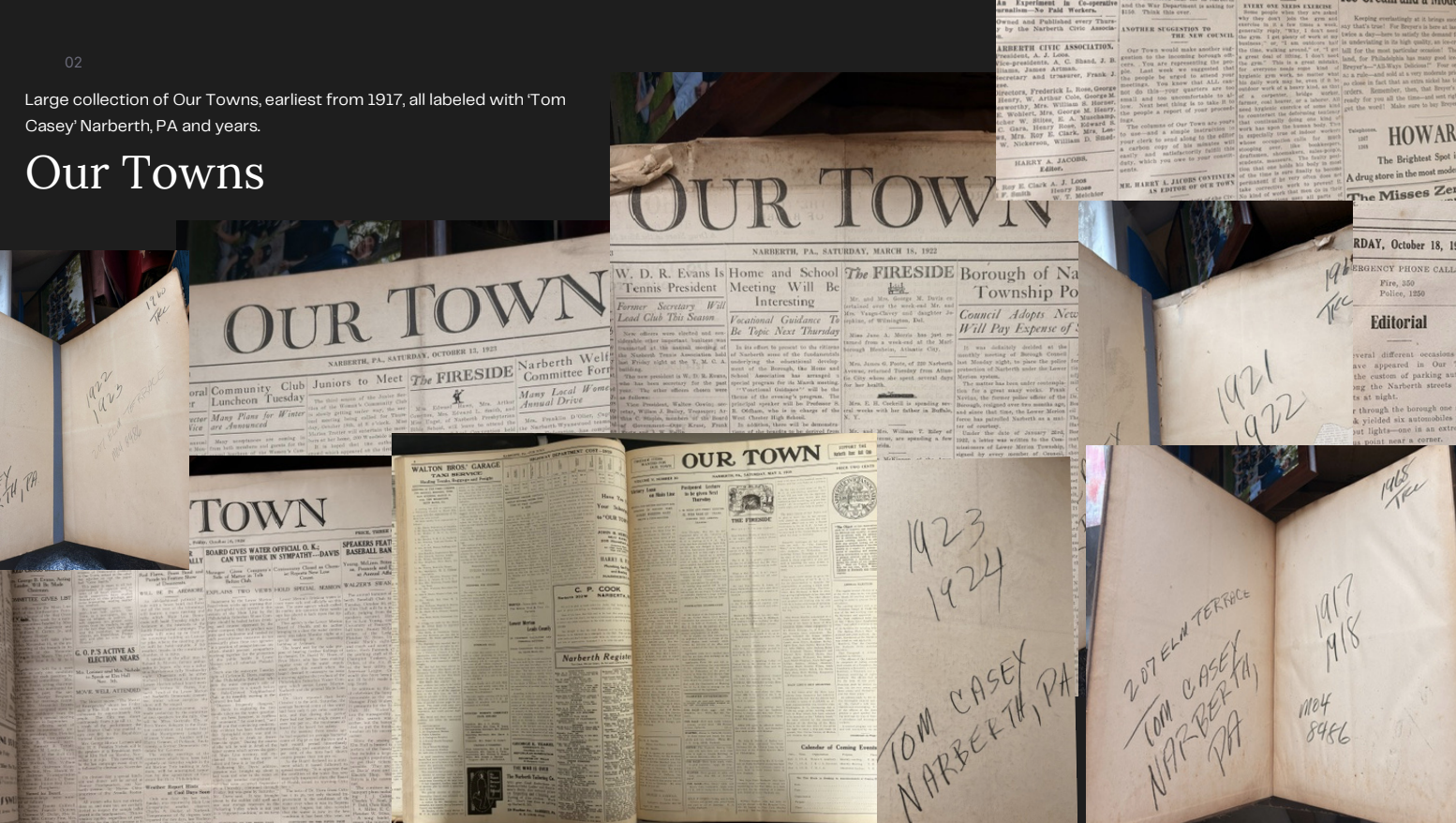
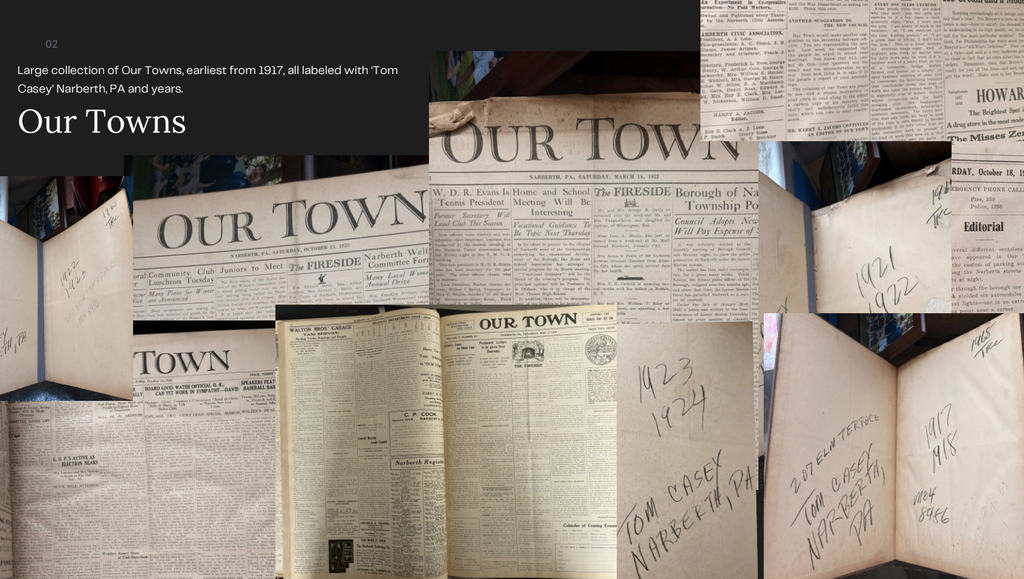
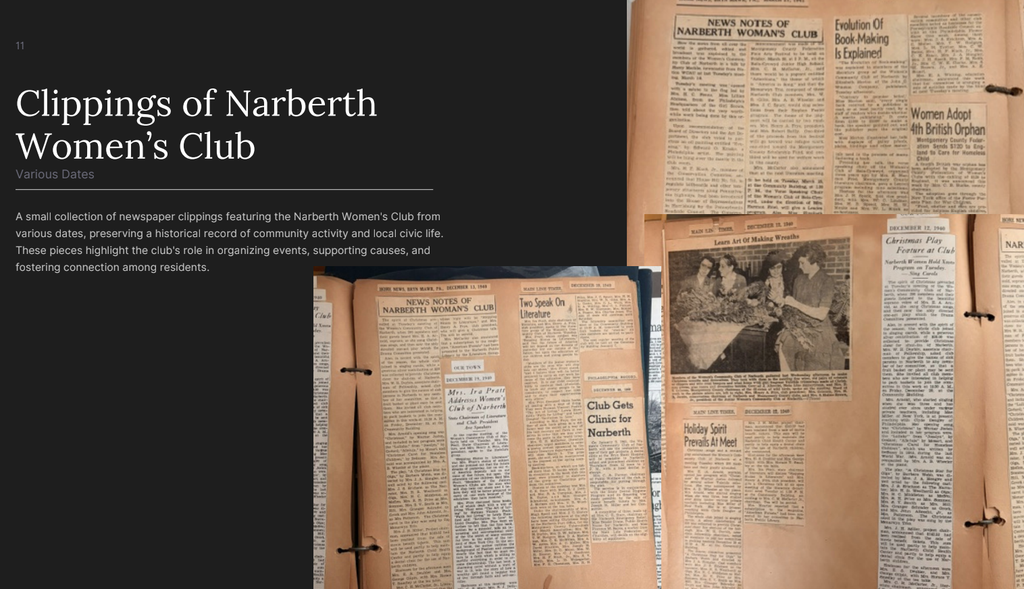
Among my favorite pieces were issues of Our Town and other local newspapers. Their pages advertised door-to-door milk delivery, shoemaking, telegram services, and other features of small-town life that have largely disappeared from our daily routines. Individually, these advertisements might seem insignificant. Together, they create an unexpectedly vivid picture of the community that existed here before us. Reading them made the past feel a little less distant and a bit less blurry.
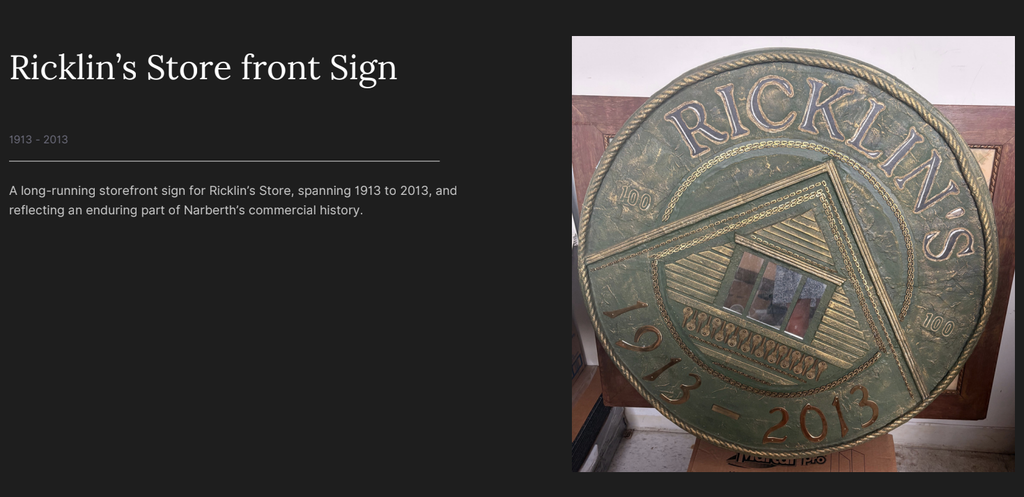
I am grateful to have had the opportunity to catalog the Narberth collection, and I am hopeful that some of its most meaningful pieces will ultimately be incorporated into the Lower Merion Historical Society’s collection, where they can be properly cared for and preserved for years to come.
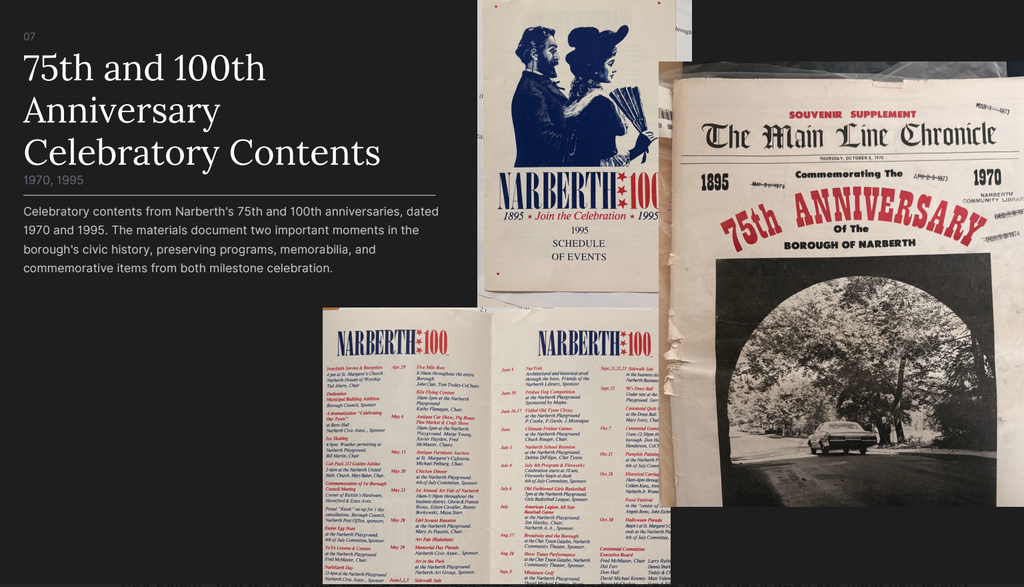
Working with these materials reminded me that local history does not need to be show-stopping to be worth preserving. Sometimes, the clearest glimpse into the past comes from the things people once considered completely ordinary.
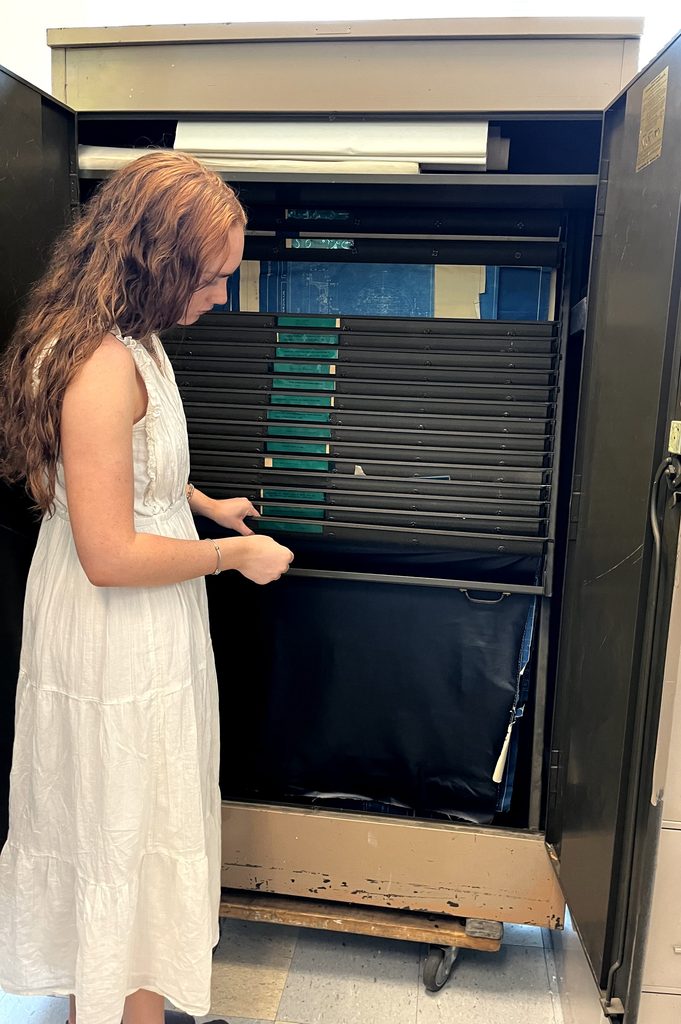
Student intern Rory Crisfulla showcasing the Borough of Narberth’s flat files collection.
